Histoires de missions
Peintre ethnographe pour le Musée national des arts et traditions populaires.
(Mnatp, actuel Mucem)
Contexte
Les pleins pouvoirs accordés à Pétain depuis 1940, ont installé le régime de Vichy, pour lequel « l’État français » prétend remplacer la République. Partis, syndicats, associations sont interdits. Du juge à l’instituteur, tous doivent prêter serment au maréchal… En vertu des décrets-lois, les rafles antisémites de la Collaboration devancent les désirs de l’occupant nazi. Contre toute Résistance, la répression multiplie arrestations, tortures, fusillades, déportations…
En 1943, Jean Amblard, semi-clandestin, expose au Salon d’automne deux dessins explicites.
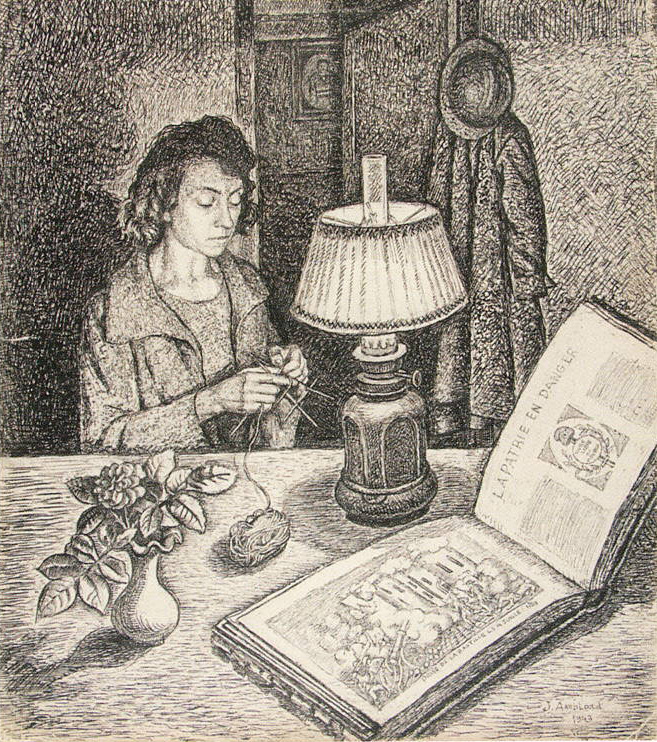
Une encre de Chine représente sa mère au premier plan, tricotant devant la table de la grande salle de la maison familiale d’Auvergne, sur laquelle est grand ouvert un livre d’Histoire. Sur la page de gauche, une gravure illustre la prise de la Bastille. La page de droite ouvre un nouveau chapitre titré « La Patrie en danger ». Au centre, une gravure surplombée d’un bonnet phrygien, figurant l’inscription « Vivre libre ou mourir ». En arrière-plan, l’uniforme suspendu d’un soldat français. Derrière la porte entr’ouverte, est accroché le portrait d’un élu républicain ceint de l’écharpe tricolore : il s’agit d’Annet Amblard, grand-père de Jean Amblard, ancien maire de Rochefort-Montagne.
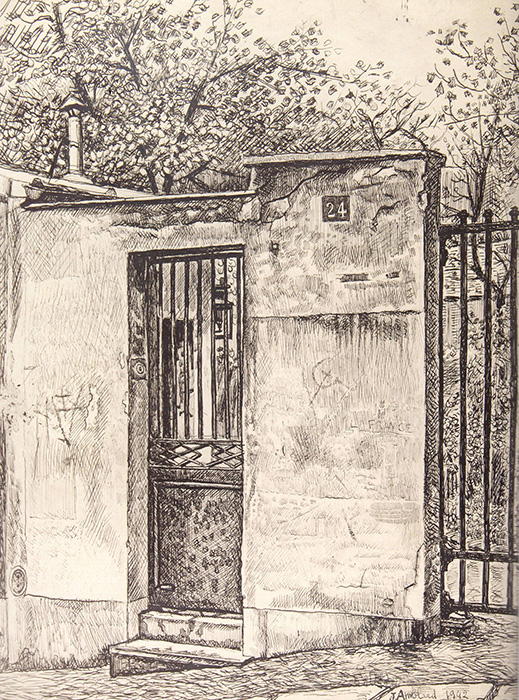
Une autre encre de Chine représente l’entrée de l’atelier du peintre, rue d’Orchampt. Sur le mur, de part et d’autre, deux graffitis. L’un figure la Croix de Lorraine, l’autre, la faucille et le marteau.
Rentrant chez lui, deux agents de la Gestapo l’attendent, installés dans son atelier. Très calme, il répond à leurs questions. Le voilà convoqué le lendemain au siège de la Gestapo, rue des Saussaies. Alerté, le Front national des Arts contre le fascisme lui ordonne de quitter Paris : « Tu deviens dangereux pour tout le monde ».
Jean Amblard s’est rendu rue des Saussaies. Il a répondu posément, sans compromettre quiconque. Mais il est immédiatement allé trouver son ami Georges-Henri Rivière, toujours conservateur du Musée national des arts et traditions populaires (Mnatp).
Fondé dans la foulée de 1936, le Mnatp considère la culture populaire au même niveau que la culture « savante ».
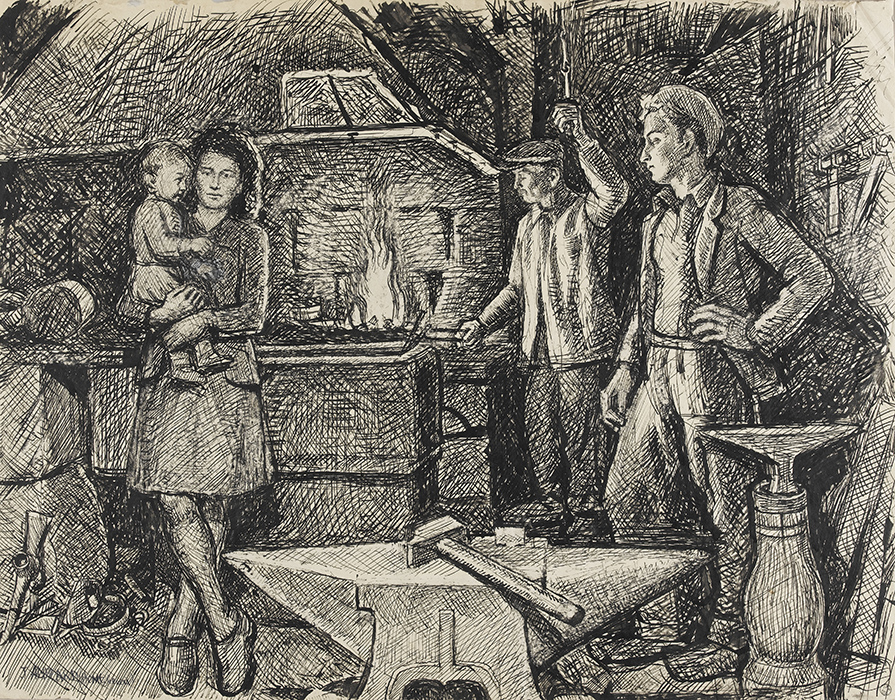
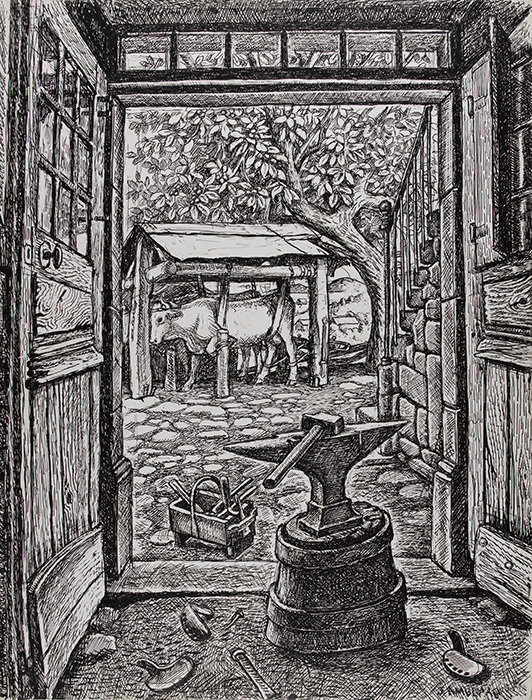
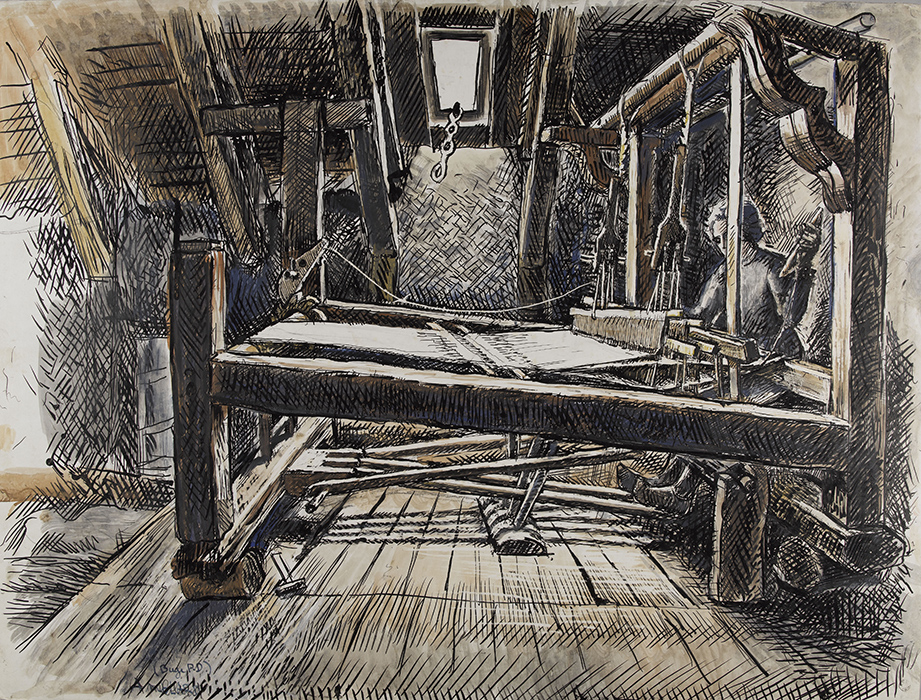
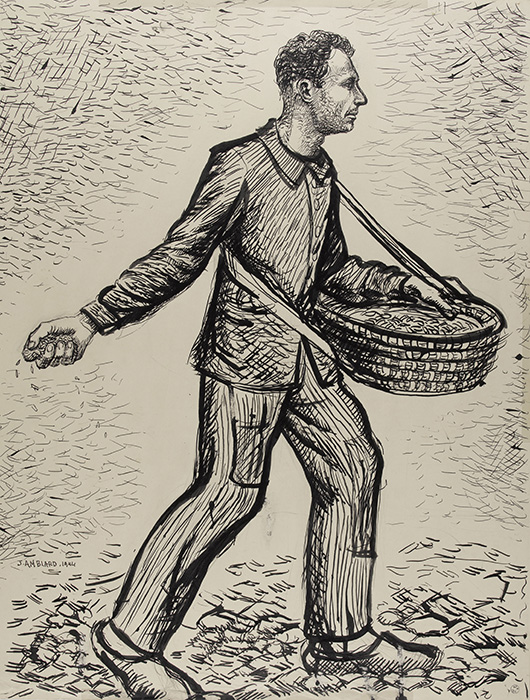
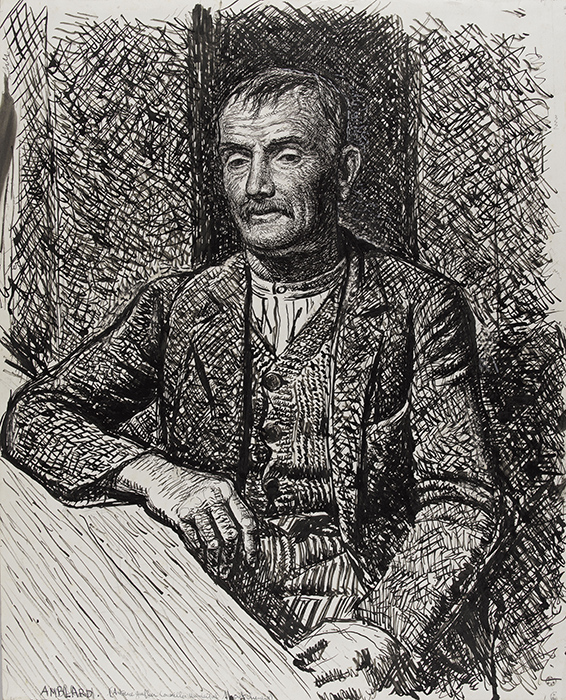
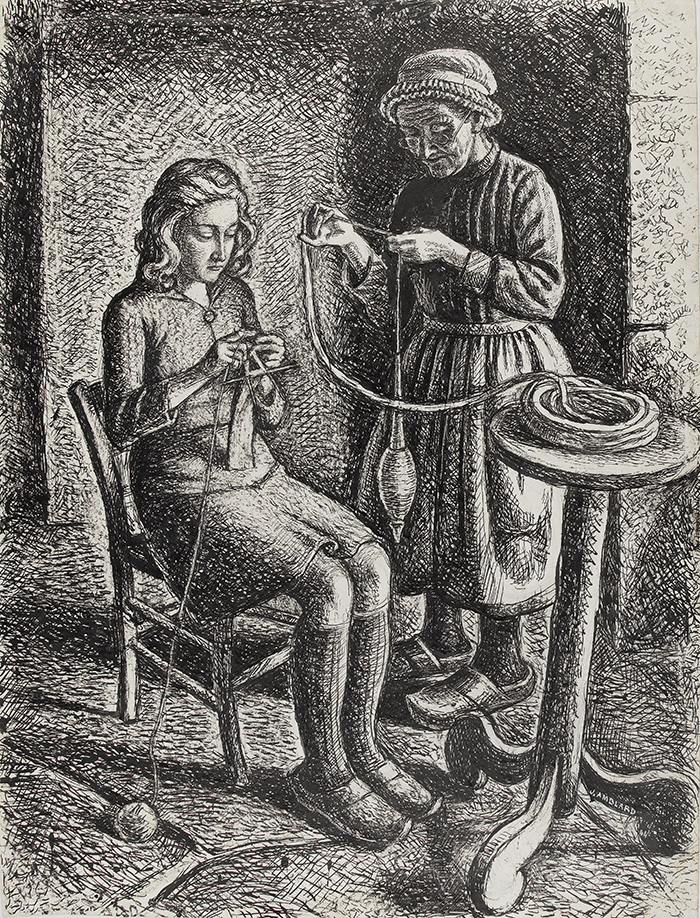
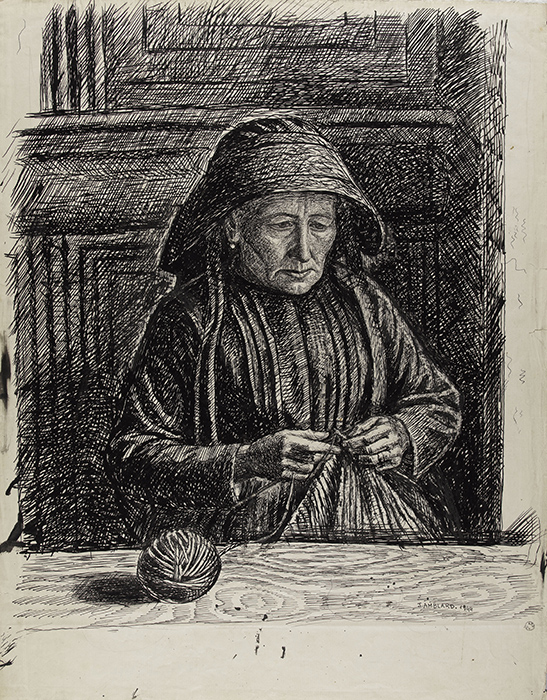
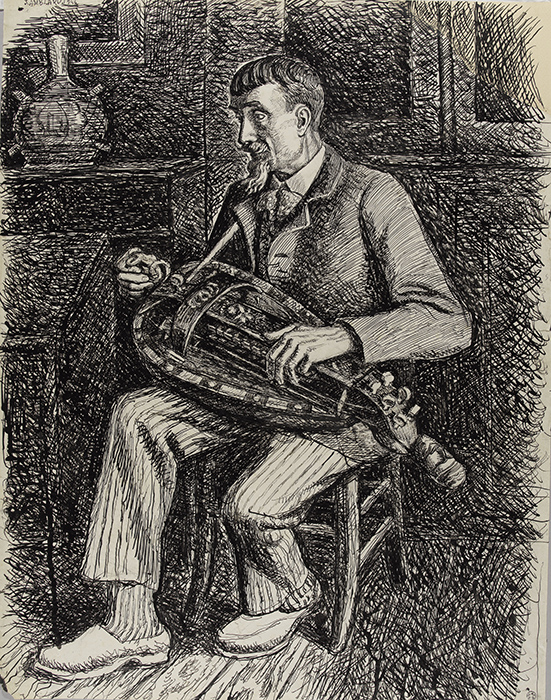
Muni d’une mission de peintre ethnographe, Jean Amblard disposera d’une solide « couverture » pour assurer la liaison avec les maquis, tout en travaillant , en peintre ethnographe, à retracer la vie paysanne dans la région de Rochefort-Montagne.
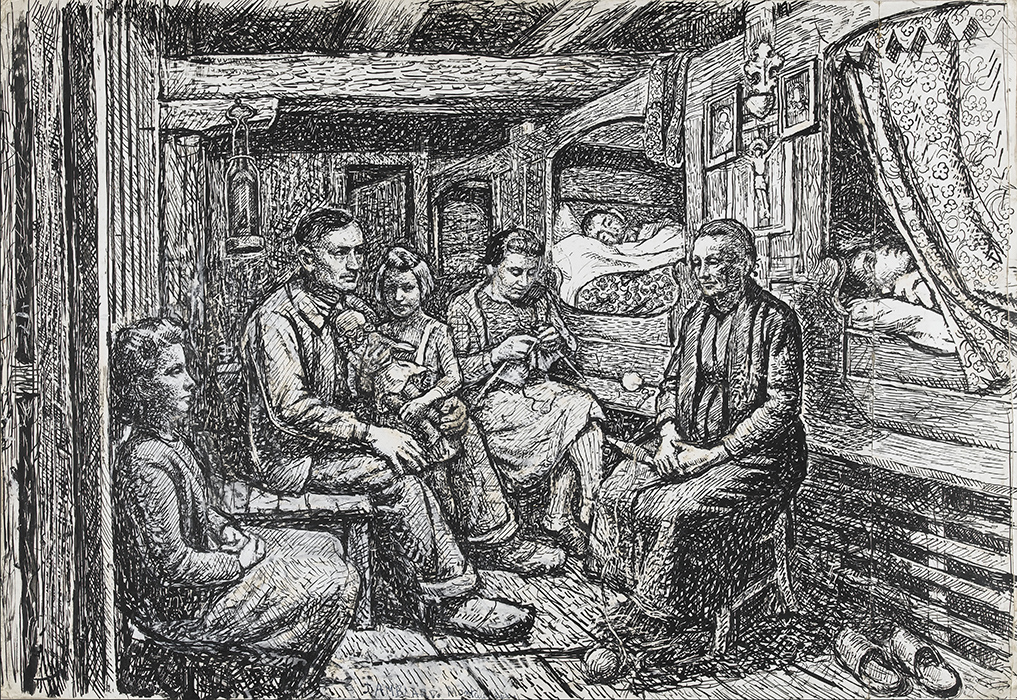
1943-1944 : Le monde paysan
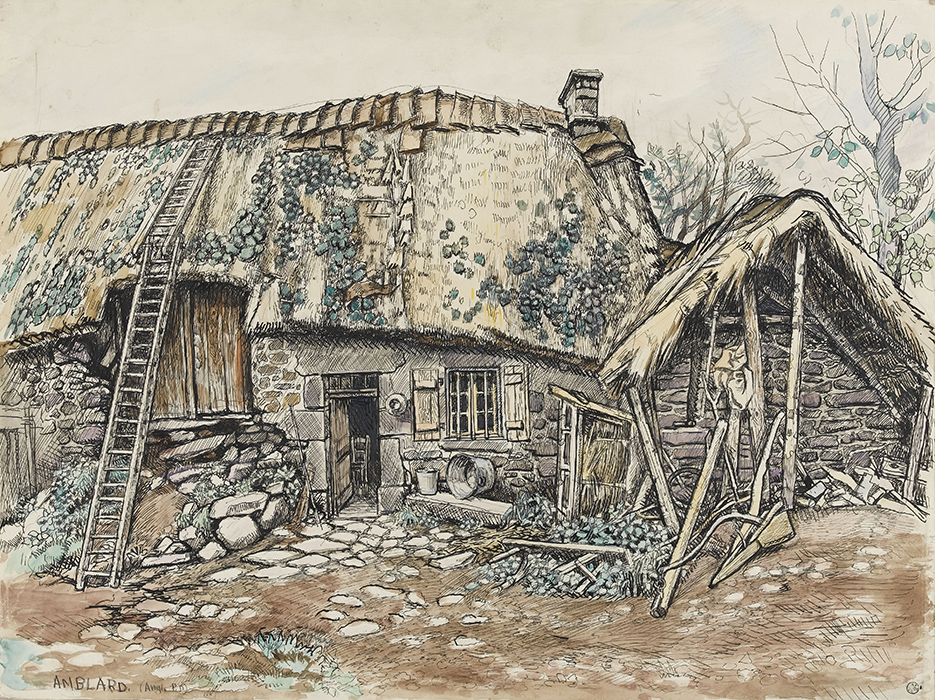
Privés d’essence, rationnés, soumis aux réquisitions de Vichy au profit de l’Occupant, les paysans vivent désormais en quasi-autarcie. On plante l’œillette pour les travaux de tissage, on file la laine, on refait le pain dans le four banal, la force animale a repris toute sa place, les savoir-faire de toujours se partagent à nouveau…
1943-1944: The peasant world
Deprived of petrol, rationed, subject to Vichy requisitions for the benefit of the Occupying Forces, peasants now live in near self-sufficiency. They plant cornflowers for weaving, spin wool, bake bread in communal ovens, animal labour has regained its place, traditional skills are once again being shared…
En mai 1944, Jean Amblard s’engage dans les FFI du Puy-de-Dôme.
Un courrier daté du 19 juin 1944. « (…) Note de service n° 44/47. En application de la lettre en date du 6 juin 1944 (…), je vous prie de la manière la plus insistante (souligné) de me retourner de toute urgence :
1) remplie et signée, la déclaration de non-appartenance aux sociétés secrètes.
2) écrites, datées et signées de votre main, les deux déclarations du modèle ci-joint de non-appartenance à la race juive et de nationalité française. Georges-Henri Rivière. »
Jean Amblard a-t-il répondu ? Un courrier de sa mère, daté de novembre 1944, le supplie de « se mettre en règle »…
Le 25 janvier 1945, Jean Amblard, nommé peintre aux armées, reçoit un ordre de mission du ministère de la Guerre du gouvernement provisoire. Il est chargé de se rendre « sur le front de la 1e armée française ». Date de retour : « Mission terminée ».
À Ostheim, non loin de Colmar, il saute sur une mine, le 19 février 1945. Amputé de la jambe droite, mutilé des doigts de la main droite, le blessé sera rapatrié au Val-de-Grâce.
1946-1947 : Le monde des mineurs
En mars 1946, aux côtés de Boris Taslitzky, rescapé de Buchenwald, Jean Amblard est envoyé dans la région du Nord.
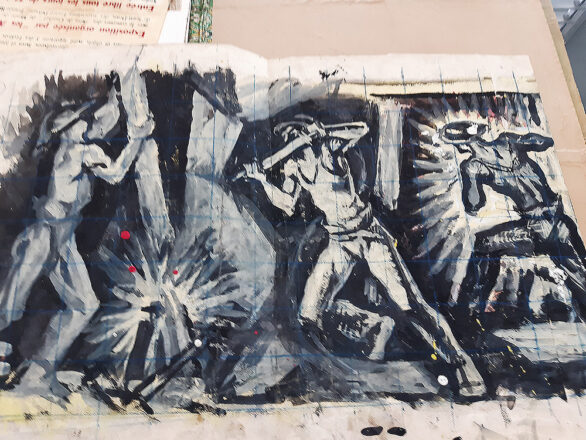
Missionnés par Georges-Henri Rivière, les deux amis découvriront le monde des mineurs, notamment à Anzin, accueillis par le musée de Denain. Brusquement, la même année, leur mission est interrompue par décret. Logés et nourris par l’habitant, ils continueront gratuitement.
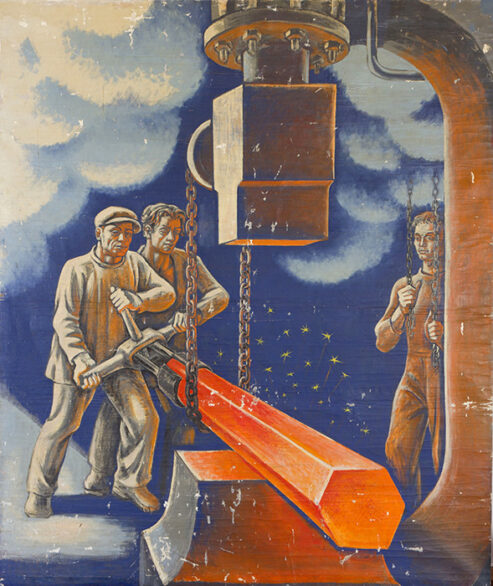
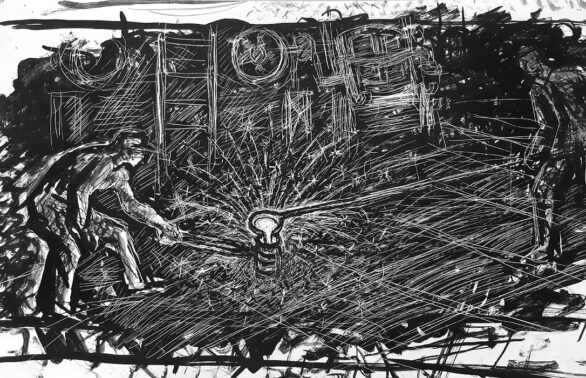
Avec le syndicat CGT des métallurgistes, les artistes poursuivront leur travail en Lorraine, dessinant sur le vif l’univers des sidérurgistes…
*
Mission stories
Ethnographic painter for the National Museum of popular arts and traditions (Mnatp, now Mucem)
Context
The full powers granted to Pétain since 1940 established the Vichy regime, in which the ‘French State’ claimed to replace the Republic. Political parties, trade unions and associations were banned. From judges to schoolteachers, everyone had to swear allegiance to the marshal… Under the decree-laws, the anti-semitic roundups carried out by the collaborationists exceeded the wishes of the Nazi occupiers. To crush all resistance, the repression led to an increase in arrests, torture, shootings, deportations, and more.
In 1943, Jean Amblard, living in semi-secrecy, exhibited two explicit drawings at the Salon d’Automne.
An Indian ink drawing depicts his mother in the foreground, knitting in front of the table in the large hall of the family home in Auvergne, on which a history book lies open. On the left-hand page, an engraving illustrates the storming of the Bastille. The right-hand page opens a new chapter entitled ‘The Fatherland in Danger’. In the centre, an engraving surmounted by a Phrygian cap bears the inscription ‘Live free or die’. In the background, a French soldier’s uniform hangs on a hook. In the background behind it hangs the portrait of a Republican mayor wearing a tricolour sash : Annet Amblard, grandfather of Jean Amblard, former mayor of Rochefort-Montagne.
Another Indian ink drawing depicts the entrance of the painter’s studio on Rue d’Orchampt. Two graffiti images are engraved on the wall on either side, one depicting the Cross of Lorraine, the other a hammer and sickle.
When he returns home, two Gestapo agents are waiting for him in his studio. He remains calm and answers their questions. The next day, he is summoned to Gestapo headquarters on Rue des Saussaies. Alerted to the situation, the National Front of Arts Against Fascism orders him to leave Paris: ‘You are becoming dangerous to everyone.’
Jean Amblard went to Rue des Saussaies. He answered calmly, without compromising anyone. But he immediately went to see his friend Georges-Henri Rivière, still curator of the National Museum of popular arts and traditions (Mnatp).
Founded in the wake of 1936, the Mnatp considered popular culture to be on the same level as ‘scholarly’ culture.
With his mission as an ethnographic painter, Jean Amblard had solid ‘cover’ to liaise with the maquis, while working as an ethnographic painter to trace peasant life in the Rochefort-Montagne region.
In May 1944, Jean Amblard joined the FFI (French Forces of the Interior) in Puy-de-Dôme.
A letter dated 19 June 1944. « (…) Memorandum No. 44/47. Pursuant to the letter dated 6 June 1944 (…), I urge you most strongly (underlined) to return to me as a matter of urgency :
1) the completed and signed declaration of non-membership of secret societies.
2) the two declarations of non-membership of the Jewish race and French nationality, written, dated and signed by you, using the attached template. Georges-Henri Rivière. »
Did Jean Amblard respond ? A letter from his mother, dated November 1944, begs him to ‘get his affairs in order’…
On 25 January 1945, Jean Amblard, appointed army painter, received a mission order from the War Ministry of the provisional government. He was instructed to go ‘to the front of the 1st French Army’. Return date: ‘Mission completed’.
In Ostheim, not far from Colmar, he stepped on a mine on 19 February 1945. With his right leg amputated and his right hand mutilated, the wounded man was repatriated to Val-de-Grâce.
1946-1947: The world of miners
In March 1946, alongside Boris Taslitzky, survived Buchenwald, Jean Amblard was sent to the Northern region.
On a mission from Georges-Henri Rivière, the two friends discovered the world of miners, particularly in Anzin, where they were welcomed by the Denain museum. Suddenly, that same year, their mission was interrupted by decree. Lodged and fed by local residents, they continued their work free of charge.
Together with the CGT metalworkers’ union, the artists will continue their work in Lorraine, sketching the world of steelworkers as they go about their daily lives…